|
25-27 Aug 2026 Lyon (France)
|
|
|
|
Keynote Speakers
We’re putting the finishing touches on our website and getting ready to share all the exciting details about Keynote speakers!
Speaker Profiles

Prof. Gaëtan Kerschen, University of Liège, Belgium
(Short bio here: http://www.s3l.be/en/kerschen)
Title: Control-based vibration testing: new opportunities for mechanical and aerospace structures
Nonlinear vibration theory witnessed extraordinary advances during the 20th century following Poincaré’s seminal work. Since the 1970s, remarkable progress has been made in computational nonlinear dynamics, driven by nonlinear finite element formulations and numerical continuation methods. Although several challenges remain, the theoretical understanding of nonlinear dynamical phenomena and our ability to predict them numerically have reached a high level of maturity.
However, this progress has had limited impact on industrial vibration testing, which still relies almost exclusively on linear assumptions. To close this gap, control-based nonlinear vibration testing (CBNVT) leverages feedback control to identify, in real time and in a model-free manner, bifurcation diagrams of nonlinear systems. This keynote will review the state of the art in CBNVT and introduce a new method, termed arclength control-based continuation (ACBC), which approaches the capabilities of numerical continuation. Its benefits will be demonstrated through numerical and experimental examples.
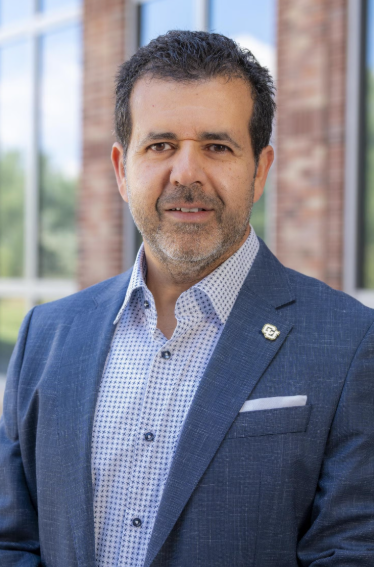
Prof. Mahmoud Hussein, University of Colorado, United States
(Short Bio here: https://www.colorado.edu/aerospace/mahmoud-hussein)
Title: To be announced soon
(abstract)

Prof. Sondipon Adhikari, University of Glasgow, United Kingdom
(Short bio here: https://userweb.eng.gla.ac.uk/sondipon.adhikari/)
Title: Passive vibration and wave control with inertial amplifiers
By addressing the ongoing trade-off between structural weight and low-frequency attenuation, inertial amplifiers (IAs) are employed as a high-performance substitute for conventional mass-based vibration suppression. The "effective inertia" that IAs produce is far greater than their static weight because they use kinematic mechanisms, like lever arms, to increase the motion of small auxiliary masses. In order to show how IA-integrated systems can be strategically embedded within periodic lattices to produce broad, low-frequency bandgaps that prevent elastic wave propagation, this work describes the analytical modelling of these systems. In addition, to optimise these systems' performance under different excitation profiles, we design the amplifier's parameters using the H2 and H∞ optimisation procedures. The findings demonstrate that inertial amplification enables the engineering of strong wave shields and high-attenuation "anti-resonance" zones by separating the dynamic impedance from the physical mass. In applications where weight efficiency is just as important as structural stability, such as aerospace, precision instrumentation, and seismic-resistant infrastructure, these findings offer a scalable framework for developing next-generation, lightweight isolation systems.

Prof. Francisco Chinesta, Arts et Métiers Paris, France
(Short bio here: https://pimm.artsetmetiers.fr/en/user/122)
Title: Reduced order models and physics informed learning enabling structural digital twins for optimal design and control
Optimal design and operation of mechanical systems need for fast and accurate predictions, while control needs moreover for efficient data assimilation techniques. Recent technologies on model order reduction and data-driven modelling enable the construction of efficient (fast and accurate) digital twins of structural systems, conciliating fast responses with accurate predictions. This presentation will describe the main components of the structure digital twin, with efficient solvers of the physics-based models, efficient data-assimilation techniques, and data-driven modelling, enabling efficient design, operation and structural control.
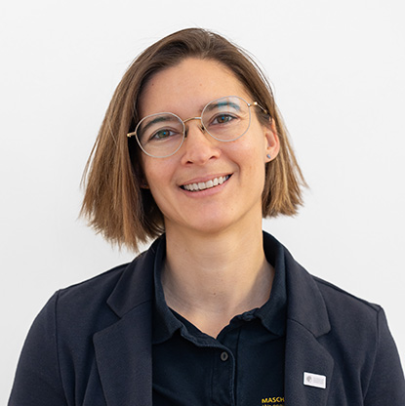
Prof. Debora Clever, TU Darmstadt, Germany
(Short bio here: https://www.ims.tu-darmstadt.de/institut/team_ims/debora_clever/index.en.jsp)
Title: Towards Sustainable and Reconfigurable Robots for Green Manufacturing
Industrial robots will play a crucial role in the transition toward sustainable manufacturing - both by becoming more energy- and resource-efficient themselves and by enabling the production of green products through cleaner, smarter processes. Yet achieving this dual role poses significant challenges across the entire robotic system lifecycle. How can robots be designed to reduce material use and energy consumption without compromising performance, robustness, or cost? How can control, planning, and monitoring strategies contribute to greener operation under real industrial constraints?
This keynote frames these questions at the outset of a new research effort, focusing on fundamental trade-offs in mechanical design, actuation, control, and system integration. Rather than presenting final solutions, early ideas and promising directions are discussed. Including lightweight and modular structures, energy-aware control concepts, lifecycle-oriented optimization, and application-driven benchmarking, the perspective covers the full spectrum of industrial robots — from high-performance automation to collaborative systems.

Prof. Claude Boutin, École Nationale des Travaux Publics de l'État, France
(Short bio here: https://www.entpe.fr/media/claude-boutin-media-954)
Title: To be announced soon
(abstract)

Prof. XingRong Huang, Ecole centrale of Pekin, China
(Short bio here: https://shi.buaa.edu.cn/hxr10305/en/index.htm)
Title: To be announced soon
(abstract)

Prof. Robin Langley, University of Cambridge, United Kingdom
(Short bio here: https://www.eng.cam.ac.uk/robinlangley)
Title: The use of statistical high frequency vibration models for passive and active control system design
It is well known that the prediction of the medium to high frequency vibroacoustic response of an engineering system can pose severe computational difficulties, due to both the large number of degrees of freedom required in a model and the sensitivity of the response to small random manufacturing variabilities. These difficulties have led to the development of analysis techniques which are inherently statistical, such as Statistical Energy Analysis (SEA), which seek to predict the mean and variance of the energy of the response, averaged over regions, or subsystems.Su ch methods are clearly useful in the design of passive vibration control: the response can simply be recalculated for various design changes (for example, the addition of soundproofing) and an optimal combination of performance and cost can be sought. However, these methods are not normally associated with the design of active control systems, since the phase of the response is not predicted by the approach. It is shown here that progress can be made towards employing high frequency methods in active control design by considering hybrid deterministic-statistical models and/or a property known as the analyticity-ergodicity condition.
Prof. Andrea Del Grosso, University of Genoa, Italy
(Short bio here: https://www.ateservizi.it/sites/default/files/DEL_GROSSO_Andrea_CV.pdf)
Title: The revised Italian Structural Health Monitoring Guidelines UNI/TR 11634
A first version of the SHM Guidelines UNI/TR 11634 has been released in 2016. At the end of 2023, after the official adoption of the Guidelines as the main reference document for the design, installation and management of SHM systems in the Decree 204/2022, concerning the risk and safety management of existing bridges, the relevant UNI Technical Committee decided to perform the revision of the text, also following the needs for clarification arising from the market and from the main Italian infrastructure owners and Governmental Agencies. The revised text is going to be released in spring 2026. Before the illustration of the main structure and content of the revised version of the Guidelines, the presentation will also discuss the global framework and some of the problems that have been encountered in the development of SHM systems in Italy.